Showing posts with label East Nashville. Show all posts

Wednesday, August 14, 2013

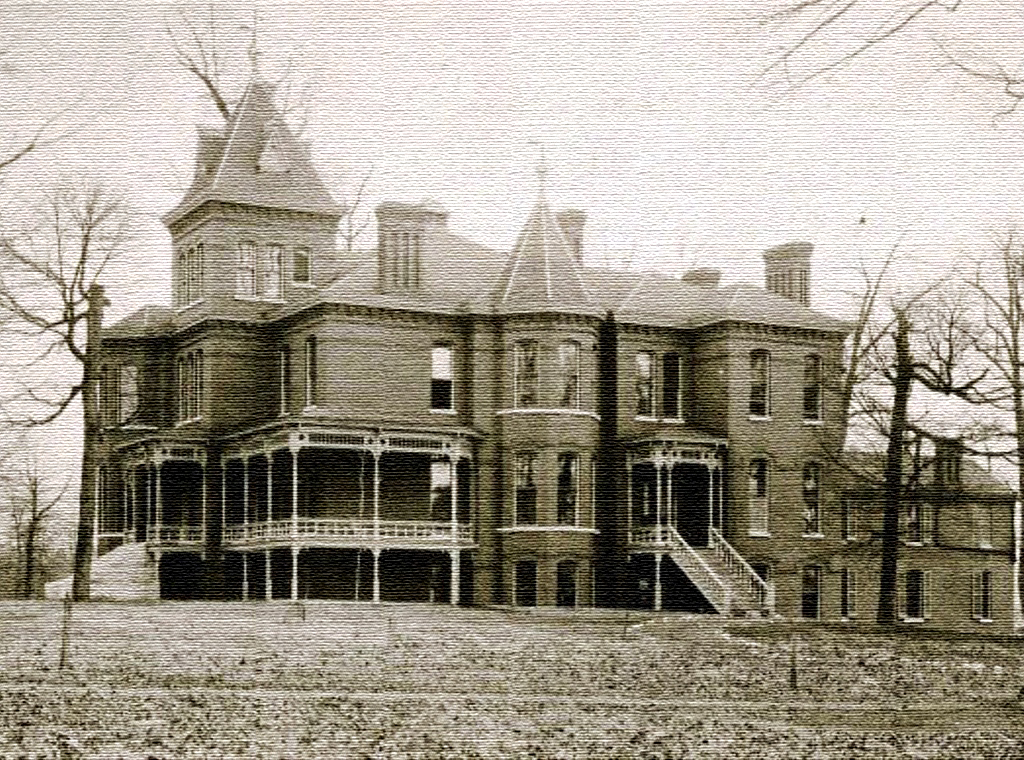
Mrs. Clark's School, East Nashville.


Mrs. M. E. Clark's Select School For Young Ladies

written by Debie Oeser Cox

Mary Eliza Wilson was born in Paris (Henry Co., TN) May 25, 1848.  Mary married Achilles Venable Clark of Paris, a Confederate veteran, on December 4, 1866.  Achilles Clark died on July 29, 1874, leaving his widow with a young daughter, Caroline.  Mrs. M. E. Clark decided to pursue a career in teaching.  She lived and taught school in Franklin, TN, for about ten years.  In 1880, Mrs. Clark leased the Tennessee Female College, in Franklin, from Methodist Bishop R. K. Hargrove.  She oversaw the operation of the school for five years.  At the expiration of Mrs. Clark's lease, in 1885, Bishop Hargrove decided to sell the school property.  

In January of 1885, Mary E. Clark came to Nashville and purchased lots 6, 7, 8, and 9, in the plan of Brownsville, in East Nashville, a total of about fourteen acres of land.  She payed $3400 in cash for the property at the corner of Scott and Greenwood Avenues.  Mrs. Clarks property was bound by, and just east of, the site of Hobson's Chapel Methodist Church.  


Plan of Brownsville


Mary soon had a substantial house constructed to serve as a school for girls.  Mary's school was a three and one half story building of red brick, designed as a suburban home. The Victorian, Queen Anne style house had turrets and towers, with bay windows, and a multi gabled roof.  A large wrap around porch at the front of the house, and a smaller porch toward the back, were adorned with fancy lattice work.  The house, with the appearance of a grand mansion, was as fine as any, of that era, built in Nashville.  Soon after the school was built, Mary received a bill from the tax assessor, the amount of which she felt was too high.   Mary wrote, in an appeal for lower taxes, to the county assessor's office, that she was owner of property "on which was erected a building for school purposes exclusively."  She stated that on June 8, 1886 this school was incorporated by the name of "The Mrs. M. E. Clark Select School for Young Ladies." 


The Board of Advisers, for Mrs. Clark's School, was headed by Charles Forster Smith, noted author and professor at Vanderbilt University.  Other members were the Honorable J. M. Dickinson attorney and president of the Tennessee Bar Association, Mr. Edgar Jones a banker and grandson of Rev. William Hume, Maj. J. S. Bransford, a land developer who lived at Edgefield near Mrs. Clark's School, Rev. G. W. Wilson, a well known Evangelist of the Methodist faith., and Maj. T. P. Weakley. Major Weakley's brother was a prominent Methodist minister.  Although not affiliated with the Methodist Church, the influence of that denomination was certain. Mary Clark worshipped, next door, at Hobson's Chapel as did some of her staff.  Mary's students also attended services at Hobson's Chapel. 

The girls were welcome residents in the attractively furnished home which featured the most modern conveniences.  School was in session from the first Tuesday in September until the first Wednesday of June. Classes were offered in English, Mathematics, and Art, with special emphasis given to French, German, Public Speaking, and Music.  


Mrs. Clark's School, ca 1890

In 1891, it was reported that the school had 6 teachers and 45 students. Tuition was $170 per year, with an additional fee for the study of piano or vocal music. The large campus provided plenty of room to explore outdoors.  There were tennis courts on the grounds and outdoor sports of every kind were encouraged.  Walking was a healthful means of entertainment and transportation. The Nashville public square and business district was near, only a couple of miles to the west.  Yet the area around the school was rural, a forest like setting, with huge trees on the grounds.

 
1891 Nashville City Directory


 Mrs. Clark's School was highly regarded as an educational facility.  Young women from prominent families, all across the country, attended the school.  The Principal, Miss Bessie Johnson, and faculty members were among the best educators in the south.  In the 1890's, Mrs. Clark's School continued to thrive.  She traveled to Europe, to study the latest methods in educating young women.  She, and her staff, worked to ensure that the curriculum was broad, balanced, and up to date.

In 1896 Mrs. Clark was involved in a terrible carriage accident. She died from her injuries on July 1, 1896.  Her remains were carried to Paris, Tennessee where she was buried next to her husband, Achillies Clark.  The school was closed soon after.  Over the next few years, Mrs. Clark's daughter Carrie Clark Crockett, wife of Sidney Scales Crockett, divided and sold the property.  Today, the site of Mrs. Clark's School is home to Cora Howe School, on Greenwood Avenue, in East Nashville.


Creative Commons License
Mrs. Clark's School, East Nashville by Debie Oeser Cox is licensed under a Creative Commons Attribution-NonCommercial-NoDerivs 3.0 Unported License.

Tuesday, August 6, 2013

General William White


by Debie Cox, 
published on August 6, 2013 at 7:01 pm,
on the 180th anniversary of the death of General William White.

A few weeks ago, I ran across a folder of photo copies of deeds, court minutes and other records that I gathered several years ago while researching General William White for the book, North Edgefield Remembered.  I wrote a summary of what I had found for Professor Bill McKee of Cumberland University and he used that and material gathered by others to write a brief sketch of General White.  The General lived on a farm that is now divided by Lischey Avenue in Northeast Nashville.  His property ran from Meridian Street back to Jones Avenue and from Trinity Lane south to 1313 Lischey Ave., near Douglas Ave.  I have been writing about General White the past few days after conducting further research and studying the material in the folder.  I realized a couple of days ago that the date of General White's death was near.  I have hurried to write the story so that I could share it. Today, August 6, 2013 is the 180th anniversary of his death.  It is more a draft than a finished story.  I will edit over the coming days, but today I am remembering General White and his family.

William C. White, son of William and Catherine Chapman White, was born October 09, 1783 in Louisa Co., Virginia.  His father was a Captain in the Virginia Militia during the Revolution. 

William White came to Tennessee as a young man and settled in Sumner County.  He was an attorney in Gallatin and became a well-regarded citizen.   William White served as adjutant general under General Jackson. He fought in the Creek Wars and he was at the Battle of New Orleans in 1815.  General White was married to his first wife about 1810.  Little is known of her.  No date or place of marriage has been located.  Her name may have been Jane Russell or Jane Scott.  The death of Jane S. White, wife of Major William White, of Davidson County, Tennessee was reported on March 16, 1816, in the Nashville Whig.  I have not been able to determine if this was the wife of our subject.  Three children were born to White and his first wife; Catherine Louise, Arthur C. and William R. White.  General White, a resident of Davidson County, married his second wife, Eliza Caroline Wharton in Davidson County in 1817.  They were married by Thomas B. Craighead of the Spring Hill meeting house.  Eliza was born in 1798 in Virginia. 

Jo Conn Guild recalled in "Old Times in Tennessee," that General White was living on White's Creek in Davidson County in 1818, when he made a visit to the General's home.  In December of 1822, General White purchased 200 acres of land in Davidson County, the western section of pioneer settler Zachariah Stull's preemption grant.  White built a two story brick home on his land, near the Dickerson Road, about two miles from Nashville. William and Eliza White, and their children moved into the new home, called White Hall after General White's father's home in Virginia.  
 
General White continued the practice of law when he moved to Davidson County and was found most days in Nashville.  Judge Guild wrote, "He [White] was one of the most gallant men I ever knew, and was the very soul of honor. He never gave or submitted to an insult."  In 1826, White became entangled in a disagreement between Sam Houston and John Erwin.  Houston, representing Tennessee in Congress at the time, had made disparaging remarks toward Erwin who had recently been named postmaster in Tennessee.   Erwin sent an intermediary, in the form of John T. Smith, a professional duelist from Missouri, to present a challenge to Houston. Houston rejected Smith, who was accompanied by General William White.  Words of disagreement passed between Houston and White.  White thought they had parted on equal ground and expected nothing further to come from the meeting.  What happened next is described in the words of General White, through a letter written, on December 21, 1826, to a friend:
"…Erwin then advertised Houston as a coward and calumniator. Houston, in the next paper, denounced Erwin as a rogue, and procured a certificate from Erwin's rival candidates to prove that he had taken a newspaper belonging to another person before Erwin became Postmaster. To this publication Houston attached the certificates of two persons, in which the altercation betwixt him and myself was very much misrepresented, thereby placing himself in a defensive, and me in an offensive attitude. Houston, who was somewhat popular, hoped, in this manner, to escape public censure himself and at my expense, and that, too, without subjecting himself to the necessity of a combat with anyone, for he was fully aware of the inequality of our situations. Knowing that, according to the tone of public sentiment here, a coward cannot live except in disgrace and obscurity, I did not hesitate as to my course, nor shall I have cause ever to regret it, for I find that, although I fell in the combat, I conquered even in my fall. Yes, I conquered the prejudices and extorted the admiration of my foes themselves, whilst I am established in the esteem and approbation of my friends. And now it affords me pleasure to add further that, although I was very severely wounded, I have entirely recovered from it."
 
The duel took place early on the morning of September 22, 1826, at Linkumpinch, just across the Tennessee line in Kentucky.  White was known to be a poor shot and was not expected to fare well.  The two faced one another at 15 paces and fired.  White fell, wounded in the groin, and Houston walked away unharmed.  White was taken to his home in near Nashville, where he soon recovered. 

Following his recovery, General White continued to live at White Hall with his family, and commuted the two miles to Nashville by horseback and by carriage.  His health was good.  He carried on his law practice and took care of his family and his farm.  In 1831 the youngest child of General White was born at White Hall.  He had fathered eleven children, three with his first wife and eight with Eliza.  On Friday, August 2, 1833, he felt out of sorts, enough so that those around him noticed.  He left town for home.  On Saturday his doctor paid a visit and treated White for a bilious attack which has symptoms of severe headache and stomach pain.  On Sunday General White was feeling better but on Monday his illness returned and worsened.  On Tuesday, August 6, about seven o'clock in the evening General William C. White, took his last breath and passed from this earth.  He was buried at his home place.   

Eliza and the children lived at White Hall and carried on as usual.  Her step-daughter Catherine's husband, William F. White, took over the role of man of the house.  He helped Eliza with the place and was named guardian for some of the children. 

In 1836, Eliza filed for letters of administration on the estate of William C. White in the Davidson County Court. William F. White, husband of sister, Catherine, gave bond to the court, as he was appointed guardian for the General's oldest sons, Arthur C. and William R. White, a lunatic.  These two were the sons of William White from his first marriage, and they were nearing the age of maturity.  The court ordered one year support set aside for the widow, Eliza C. White, and her family.  It was also ordered that the estate be divided among the heirs, but that the younger children's share to be reserved until they came of age.  On January 2, 1838, William F. White gave report to the court on his ward William R. White, indicating that William R. had died since the last report in May 1837.  On the same day letters of administration were granted to Arthur C. White on the estate of his deceased brother William R. White. 

On January 23, 1838, Eliza C. White, widow of the General, was married to John W. Ogden, a minister in the Presbyterian Church.  A few months later Ogden was appointed guardian for the minor children of Eliza and General White: George W. White, Jane Eliza White, Alfred Harris White, Mary Ann White, Charles Henry White, Aaron Chapman White, Lucy Caroline White and Washington Lafayette White. 

Eliza lived at White Hall until her death in 1872.  She is buried near her home in the family cemetery, along with both of her husbands.  Now called the Ogden-White cemetery, the burial ground is all that remains of the William White homeplace.  The old house and surrounding property on the east side of Lischey Avenue, including the cemetery, in all about 90 acres, was purchased in 1882 by the Thomas Joy family.  The Joy family renovated the old house and added an addition to the front, changing the look of the old house.  It became known as the Joy-White house.  Additional houses were constructed by the Joy's in the 1880's and 1890's on the property.   The Joy family operated a floral business on their property and some of the family lived on Lischey Avenue into the early 1970's.  The old White home fell into disrepair in later years and in 1992 it was demolished.  The photo below shows the front section of the house, built by the Joy family in the 1890's.

The Tennessean, Apr 24 1992


Following is a listing of those buried in the Ogden-White cemetery. The connections between the White and Ogden family are confusing.  Buried in the cemetery are children of William White and his first wife Jane as well as some of the children by his second wife Eliza Wharton. Eliza's second husband, Reverend Ogden is buried in the cemetery along with several of children from his first marriage.  Gen. White's family and the Rev. Ogden family were also connected through the marriage of Gen. White’s son Arthur C. White to Mary Ann Ogden daughter of Rev. Ogden.


Names of person interred in the cemetery of General William White and their relationship to General White.

1. General William White, born October 9, 1783, died August 6, 1833, son of William and Catherine White of Louisa County, Virginia.  

2. Arthur C. White, born December 31, 1815, died March 4, 1877, son of General William White and his first wife Jane Scott.

3. Mary Ann Ogden White, wife of Arthur C. White, born 1823, died 1887.  She was the daughter of Rev. John Ogden who was also buried in the cemetery.

4. Arthur C. White, born 1848, died 1849, son of Arthur C. White and Mary Ogden White.

5. Catherine Louise White, born about 1812, died 1846, daughter of General William White and his first wife Jane Scott.  Her husband’s name was also William White.  He was Colonel William F. White who died in Montgomery Co., KY in 1854.

6. Eliza Caroline Wharton White Ogden, born 1798, died 1872.  She was the second wife of General William White and after his death she became the second wife of Rev. John Ogden. 

7. Lucy Carolina Bowman, born 1823, died 1856, daughter of General William White and his second wife Eliza Caroline Wharton, wife of Dr. Joseph A. Bowman.

8. Joseph A. Bowman, born 1812, died 1875, husband of Lucy Carolina White Bowman.

9. Laura White Bowman, infant daughter of Jos. A. and Lucy C. Bowman, born 1853, died 1855.

10. Dr. W. L. White, born 1827, died 1867.  His full name was Washington Lafayette White and he was a son of General William White and his second wife Eliza Caroline Wharton.

11. B. W. Ogden, born 1828, died 1854, son of Rev. John Ogden and his first wife whose name is unknown.

12. Eliza Hall Ogden, born 1835, died 1850, daughter of Rev. John Ogden and his first wife whose name is unknown.

13. Rev. John W. Ogden, born 1794, died 1879.  He was the 2nd husband of Eliza Caroline Wharton White.

14. America W. Bowman, born 1829, died 1869. [I do not know the connection to the family]


Monday, July 8, 2013

Lynnlawn and the Stratton family


Lynnlawn
photo courtesy TSLA


Thomas Stratton first came to Davidson County about 1809.  He traveled back to his native Virginia on at least two occasions before settling here permanently.  About 1818, Thomas came with his second wife Elizabeth Blakley Swann, their young son Madison and infant daughter Elizabeth.  They likely traveled with Willis Swann, father of Elizabeth Blakley Swann, and his family.  Swann bought property on the Cumberland River at the mouth of Dry Creek.  After the death of Elizabeth, Thomas remarried and moved to Sumner County.  Several of his children followed.  Two of his sons became well known Nashville business men.  Both owned wholesale grocery companies in Nashville.  Madison is best known for founding and naming the community of Madison in Davidson County.   

1860 Nashville City Directory Business of Madison Stratton


Three of the children of Thomas and Elizabeth Swann Stratton would eventually have homes on Gallatin Pike in East Nashville.  Jane Stratton, daughter of Thomas and Elizabeth, was married in 1842 to Kindred Jenkins Morris.  Kindred Morris and Jane owned a home on Gallatin Pike near East Nashville High School.  Madison Stratton and Thomas E. Stratton purchased land near their sister and brother in law.  The brothers bought adjoining tracts on August 14, 1852 from Eli Morris.  Madison Stratton built a home between Stratton and Calvin Avenues on Gallatin Pike. 

1860 Nashville City Directory Business of Thomas E. Stratton

The tract purchased by Thomas E. Stratton, was on Gallatin Pike between Eastland and Stratton Avenues.  The home built by Thomas and his wife Mourning Morris Stratton, about 1852, was an Italian Renaissance style.  It has been suggested that William Strickland, architect of the Tennessee Capitol Building designed the house.  The drive of the home was said to have been lined with lynn trees and the Stratton family named their home Lynnlawn.  The two story brick house had 18 rooms and ceilings on the first floor were 17 and one half feet high.  The large main hall and curving staircase was very much like that in the Hermitage, home of Andrew and Rachel Jackson.  

Plat filed in 1888 shows the Stratton Home
Thomas Stratton died in 1881, almost thirty years before his wife Mourning, who died in 1908.  Thomas and Mourning are buried at Mt. Olivet near the plot of Kindred and Jane Morris.

 
Morris and Stratton Monuments at Mt. Olivet
Photo from CB - Find a Grave Contributor
Thomas and Mourning had two daughters, Addine and Carrie and a son, Mosley Thomas Stratton born in 1845.  After the death of his mother, Mosley T. Stratton moved back into the old home place.  He died in 1910 and ownership of the home passed to his children.  His surviving sons Thomas, Mosley, Jr. and Fred Stratton and a daughter Laura, wife of John Branham, sold their interest in Lynnlawn to their sister Nina Stratton Foster.  Nina and her husband Edgar Foster and their son Stratton soon moved into the home.  In 1957, Nina, now an aging widow, sold the home to H. G. Hill, a Nashville grocer.  Four generations of Stratton's had lived at Lynnlawn.  


About 1960, the house was damaged by fire and was soon demolished.  The lot was vacant for many years.  An H. G. Hill grocery was built there in the 1970's. Today an Aldi's food store is on the site.

Friday, July 5, 2013

Nashville's Riverwood Mansion


Courtesy Metro Nashville Archives


According to Paul Clements in volume one of his set of books, A Past Remembered, the back section of the Riverwood house, originally a two story federal style structure is the older part, and was built by Philip Philips.  Philips purchased the land in 1795 and was dead by 1797.  Philips, land speculator and a very wealthy man, left his wife Susannah with a number of children, some of them nearly grown.  With the help of ten slaves and her older sons, Susannah managed the farm until her death in 1805.  In 1820 the house along with 580 acres was sold by the Philips heirs to Dr. Boyd McNairy.  Dr. McNairy had a house in Nashville and the Philips place was his country house.  

 
In 1829 Dr. McNairy sold the house to Alexander Porter, Sr. and his wife Susan. Alex Porter died a few years after buying the house.  The widowed  Susan Porter, soon after the death of her husband in 1833, constructed a large two story home in front of and only a few feet away from the old Philips house.  The old house was then used as a kitchen and slave quarters.  The Porter's called their plantation "Tammany Wood."  In about 1851, Alexander Porter Jr. was thirty years old and the only child of Susan who remained at home.  He oversaw a renovation of the two houses, which enlarged the front of the house and connected the Porter house to the old Philips house. The Greek Revival front with the large columns, that you see today was, added with the 1851 renovation.   

In December of 1859, Alexander Porter, Jr., who had earlier purchased the share of his brothers and sisters in their parents land, sold Tammany Wood to William Cooper, who changed the name of the plantation to Riverwood.  Cooper, who never married, lived for a time in the house with his brother Henry and Henry's family.  The Cooper brothers were attorneys in Nashville.  Henry was elected to the U. S. Senate and moved, with his family, away from Riverwood, in 1870.  About this same time William, who had been appointed as a justice of the Tennessee Supreme Court, also left Riverwood, moving to Nashville.  The Cooper brothers, Henry and William, never returned to live at Riverwood.   


William moved to New York and at his death in 1909 he left his property to his brothers and their heirs.  He left the home Riverwood and 69 acres to his brother Duncan Brown Cooper.


Duncan had lived most of his life in Maury County, TN but after the death of his wife in 1893, he moved to Riverwood with his children.  Sometime after 1910  Duncan's daughter, Mrs. Sarah Burch and her husband, moved to Riverwood to live with her father.  Known by the nickname Sadie, she had been married in 1899 to Lucius Edward Burch.  In 1914 Sadie and Lucius Burch began to purchase some of the surrounding tracts of the William F. Cooper land.  Also in 1914, Sadie bought from her father and her siblings their interest in the home tract of Riverwood.  Duncan continued to live at Riverwood until his death in 1922.  Sadie Cooper Burch died in 1975 and Riverwood belonged to Cooper family descendants until 1978.

Special thanks to Paul Clements for sharing his excellent research on the Riverwood property, from the "A Past Remembered Collection" at Metro Nashville Archives.  Mr. Clements book  can be found at Metro Nashville Archives and at the Tennessee State Library and Archives.  
Riverwood timeline: 
1783 - Ephraim McLean receives grant for land along the Cumberland.
1795 - Philip Philips purchased the farm, where Riverwood Manison now stands, from Ephraim McLean. Philips built a two story Federal style house that is now the back section of Riverwood Mansion.
1797 - Philips dies, leaving the management of his home and farm to wife Susannah Philips, with help from her grown sons and many slave.
1805 - Susannah Philips dies.
1820 - Philips heirs sell house and 580 acres to Dr. Boyd McNairy.  Dr. McNairy lived in the Nashville and used the Philips house for a country home.
1829 - Dr. McNairy sells home to Alexander Porter, Sr. and his wife Susan. They called the plantation "Tammany Wood" after the Porter ancestral home in Ireland.
1833 - Susan Porter having been recently widowed constructed a larger two story house just in front of the older Philips house.  The Philips house was used as a kitchen and slave quarters.
1851 - Alexander Porter, Jr. connected the Porter house to the Philips house and renovated and enlarged the residence.  It was in 1851 that the Greek Revival columned front was added to the house.
 1859 - Alexander Porter, Jr. sold the home along with 851 acres to William F. Cooper.  Cooper renamed the place Riverwood.  He was unmarried and lived in the home with his brother Henry Cooper and Henry's family.
1870 - Both William and Henry Cooper moved away from Riverwood, never to live there again.
1895 - Duncan Cooper moved to Riverwood, from Maury County, Tennessee with his children, after the death of his wife Mary in 1893.
1909 - William Cooper dies, leaving his property to his brothers and their heirs.  He left the home Riverwood and 69 acres to his brother Duncan Brown Cooper. 
1914 - Sarah Cooper Burch and her husband Lucius began to buy surrounding tracts from the heirs of William F. Cooper. She also purchased from her father and siblings their interest in the Riverwood home tract.
1922 - Duncan Cooper dies at Riverwood, now the home of his daughter Sarah Cooper Burch.

Creative Commons License
NNashville's Riverwood Mansion by Debie Oeser Cox is licensed under a Creative Commons Attribution-NoDerivs 3.0 Unported License